Yu Xinding │ International Trade Frictions and the Reconstruction of the Global Value Chain
On the afternoon of December 8, 2018, the academic seminar on "International Trade Relations and the Reconstruction of Global Economic Governance" - Session 2: "The Impact of International Trade Frictions on the Global Value Chain" was successfully held at Tsinghua University. Experts and scholars from all walks of life participated in the conference. This conference was hosted by the Center for International Finance and Economic Research (CIFER) of the National Institute of Financial Research at Tsinghua University and the Center for Monetary Policy and Financial Stability Research.Yu Xinding, an associate professor at the School of International Economics and Trade of the University of International Business and Economics, shared a report titled "International Trade Frictions and the Reconstruction of the Global Value Chain".
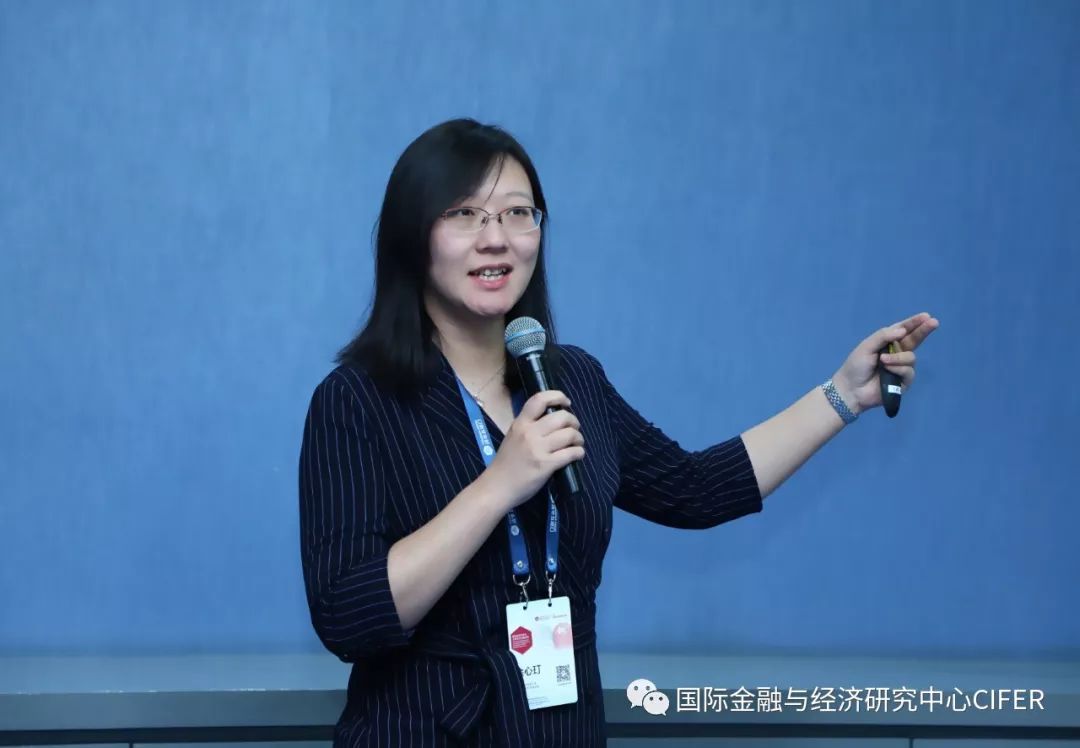
Yu Xinding is currently an associate professor at the School of International Economics and Trade of the University of International Business and Economics. He obtained a Doctor of Economics degree from Tsinghua University in 2014 and is mainly engaged in relevant research in the fields of international trade, international finance, and the global value chain. He has published many papers in various Chinese and English journals.
Teacher Yu Xinding first split the global GDP into four parts, namely pure local production activities, traditional final - product trade, simple global value chains, and complex global value chains. Among them, the former part belongs to non - global value chains, and the latter two belong to global value chains. By analyzing the performance of the above four activities from 2000 to 2014, Teacher Yu concluded that the global economic and trade structure and governance structure have changed from an old normal to a new normal, that is, from a development model dominated by the United States and driven by China to a block - based pattern of "tripartite confrontation" formed by the North American value chain, the European value chain, and the Asian value chain.