News | "Academic Journal Authors' Meeting" Sub - forum —— "2019 International Trade Relations and Re
On the afternoon of December 8, 2019, the fourth sub-forum of the "2019 International Conference on International Trade Relations and Reforms in Globalization"—a "Meeting with Academic Journal Authors"—was successfully held. The event was jointly organized by the Center for International Finance and Economics Research (CIFER) of the National Institute of Financial Research at Tsinghua University and the Center for Cross-border Digital Capital Research (IDC) of the Institute for Fintech Research at Tsinghua University. More than ten editors and scholars from renowned academic journals, including *Peking University Journal*, *International Economic Review*, *International Finance Research*, *International Trade Issues*, *International Business*, *Journal of Economics*, *Economic Dynamics*, *Economic Research Journal*, *Tsinghua Financial Review*, *Quantitative Economics and Technological Economics Research*, *Foreign Affairs Review*, *Xinhua Digest*, and *China Industrial Economics*, participated in the meeting. Liu Bin, a researcher at CIFER and associate professor at the China WTO Institute of the University of International Business and Economics, moderated the discussion.
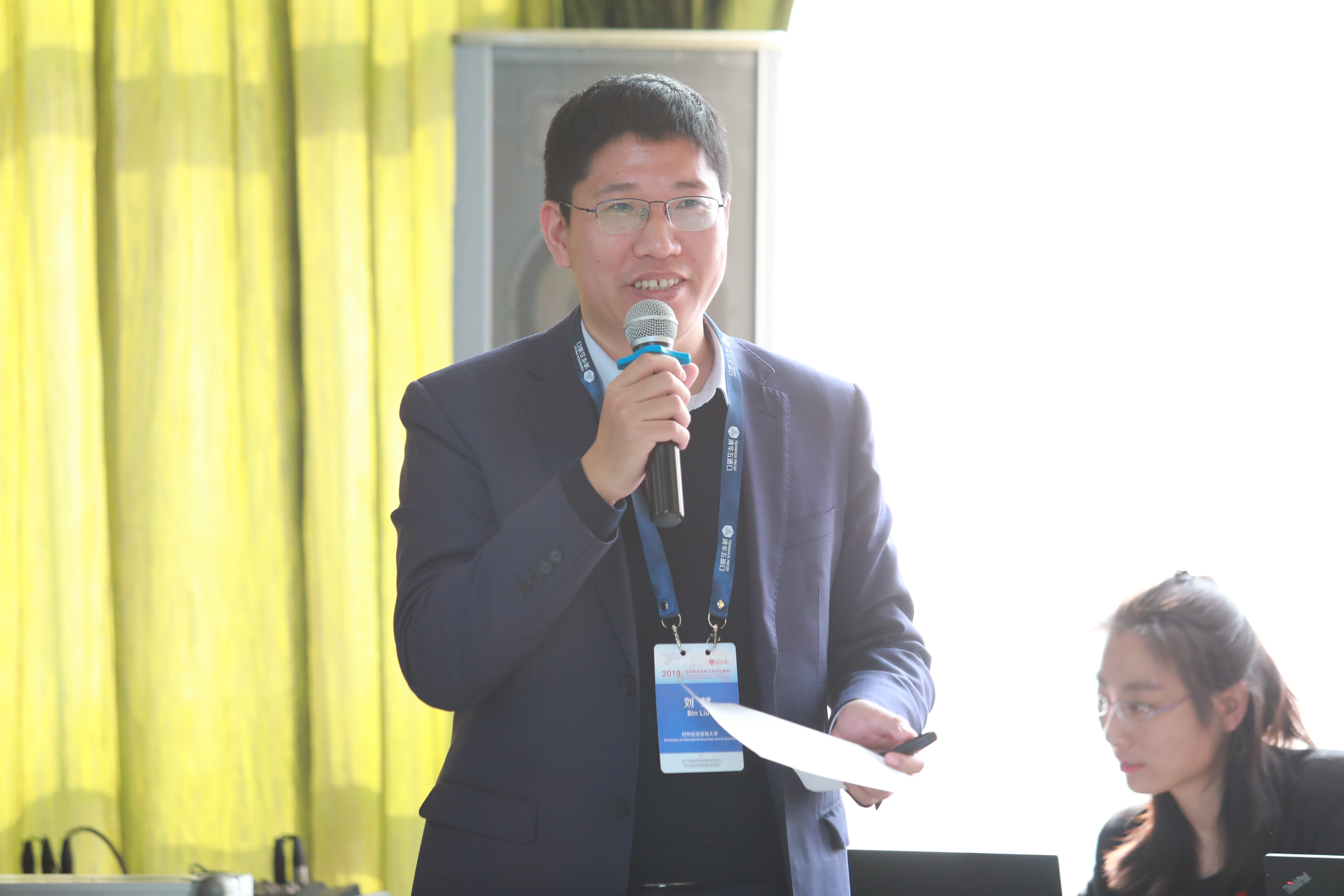
Teacher Liu Bin chaired the meeting.
First, Professor Liu Bin introduced and welcomed the experts from the participating journals. Next, Professor Liu briefly introduced the conference theme: each journal introduced its positioning, style, main sections, the importance of selected topics, precautions, writing requirements, review process, and recent publication plans for articles related to Sino-US (international) trade relations and global economic governance.

Professor Ju Jiandong delivered a welcome speech.
Professor Ju Jiandong welcomed and thanked the journal experts attending the conference, noting that academic research on the Sino-US trade dispute is still in its maturation stage and requires further promotion. Professor Ju expressed his hope that the academic seminar on "International Trade Relations and the Reconstruction of Globalization" would provide a platform for academic research and exchange, offering scholars and authors on the Sino-US trade dispute an opportunity to communicate with journal editors and ultimately improve the academic level of research on this topic.
 Professor Liu Shuguang from the *Journal of Peking University* gave a speech.
Professor Liu Shuguang, Executive Deputy Editor-in-Chief of the *Journal of Peking University* (Philosophy and Social Sciences Edition), introduced the journal, stating that it promotes mainstream values, disseminates positive energy, traces social trends, theoretical frontiers, and academic hotspots, reflects Peking University's voice on major theoretical issues, demonstrates Peking University's level in academic exploration and innovation, and adheres to Peking University's rigorous academic style in editing and proofreading. The journal relies on Peking University's rich humanities and social science resources, combining the brand awareness of creating a world-class university with the pursuit of high-quality publications, and integrating excellent academic traditions with modern publishing concepts.

Wang Bijun, Professor of International Economic Review
At the meeting, Wang Bijun, Director of the Editorial Department of *International Economic Review* and Associate Research Fellow at the Institute of World Economics and Politics, Chinese Academy of Social Sciences, pointed out that *International Economic Review* focuses on key and hot issues both domestically and internationally, providing academic, policy, and ideological commentary from a strategic perspective. It emphasizes innovative thinking, adheres to academic standards, maintains a global perspective while remaining grounded in China, and presents clear viewpoints. Its audience includes political, academic, and business circles. The journal covers a wide range of topics, as long as they are related to international economics and politics. Furthermore, the journal does not have strict requirements regarding models and empirical evidence. *International Economic Review* collects articles through a combination of submissions, commissioned articles, and calls for papers, with a review period of approximately two months.

Speech by Professor Bian Weihong from "International Finance Research"
At the meeting, Ms. Bian Weihong, Deputy Editor-in-Chief of *International Finance Research* and Director of the International Finance Research Institute of the Bank of China, pointed out that *International Finance Research* comprises five major sections: financial theory and policy, global finance, financial markets, research on financial institutions, and corporate finance (newly added). Adhering to its international roots, it continuously publishes articles by international experts, gaining widespread attention. It emphasizes column planning and in-depth research on key topics. The 2020 submission directions mainly include hot topics such as the restructuring of the global trade landscape and the "Belt and Road" initiative and international cooperation; classic theoretical topics such as RMB exchange rate, capital account opening and capital flows; old problems and new methods related to financial risk and financial security; and practical topics such as commercial bank operations and changes in global financial regulation, and digital finance. Faculty and students are welcome to submit their work.

Professor Cui Xinsheng spoke on "International Trade Issues" and "International Business".
At the meeting, Professor Cui Xinsheng, Executive Deputy Editor-in-Chief of *International Trade Issues* and *International Business*, pointed out that the journals have always adhered to the correct political orientation, strictly upholding the principles of prioritizing politics and academic prosperity, serving the country's open economy construction, and continuously adjusting and improving their column settings in accordance with the new requirements of reform and opening up in the new era. Among them, the Economic and Trade Forum, relying on the university's advantageous disciplines, focuses on major domestic and international political events, hot topics, and focal issues, and has successfully published innovative research results from nearly 100 well-known domestic and foreign research institutions and national key research bases. In the future, the journals will increase their efforts to solicit articles from renowned experts and strengthen cooperation with conferences related to international trade.

Speech by Professor Wang Hong from the Economic Journal
At the introductory meeting, Ms. Wang Hong, Director of the Editorial Department of the *Journal of Economics*, highlighted the journal's key characteristics as "academic integrity and impartiality, independent and objective research, and rigorous and standardized methods." She pointed out that the journal emphasizes innovation in thought and theory, employs standardized research methods, integrates theory and application in its presentation, and maintains an international research perspective. The journal's peer review process follows internationally accepted practices, employing a system of associate editor responsibility. The editor-in-chief conducts the initial review, and manuscripts are then assigned to relevant associate editors based on their respective fields. The associate editors then conduct a second review, and manuscripts that pass this second review enter a double-blind peer review process. The final acceptance decision is made by the associate editor based on the opinions of the peer reviewers and their own review.
 0
Speech by Professor Li Rengui from "Economic Dynamics"
At the introductory meeting, Mr. Li Rengui, Deputy Director of the Editorial Department of *Economic Dynamics*, introduced that the journal is divided into two main sections: Domestic Economic Theory Dynamics and International Economic Theory Dynamics. The Domestic Economic Theory Dynamics section focuses on major economic theoretical and practical issues in the process of economic reform and development, primarily featuring original academic papers. The International Economic Theory Dynamics section emphasizes the review of cutting-edge international economic theories and the latest research progress, mainly consisting of review articles. It is worth emphasizing that articles in the International Economic Theory Dynamics section differ from traditional economic thought history articles; they must highlight either "novel topics" or "new literature." Furthermore, they should strive to "expand the scope of a small topic" rather than "concisely address a large topic," avoiding writing comprehensive "grand reviews."

Professor Xie Qian from *Economic Research* gave a speech.
Xie Qian, Associate Research Fellow at the Institute of Economics, Chinese Academy of Social Sciences, first introduced the basic information about the journal *Economic Research* and the proportion of articles published in various fields of the discipline. He pointed out that *Economic Research* focuses on China's national conditions and prefers papers that study Chinese issues. Next, Professor Xie shared his insights on article selection and literature review: research directions should revolve around one's own professional field, with clear goals and orientations; the scope of the selected topic should be...Refer to authoritative literatureThe size is appropriate. Furthermore, there is a growing trend to provide targeted suggestions at the end of the article, incorporating calculation results.
 Tsinghua Financial Review
Ms. Wang Lei, a senior editor at *Tsinghua Financial Review*, briefly introduced the journal using the keywords "reaching for the sky, grounded in reality, academic, and policy-oriented." *Tsinghua Financial Review* designs a cover story each month focusing on the most pressing financial issues and compiles articles accordingly. It features eight regular columns: Macroeconomics, Central Banks and Currency, Banking and Credit, Capital Markets, Wealth Management, Internet Finance, Paper Stories, and International Affairs. The Banking and Credit column includes a sub-column, "Bankers' Insights." In 2020, *Tsinghua Financial Review* also plans to launch a "PBC School of Finance Research" column, leveraging the strong research resources and advantages of various research centers at Tsinghua University's PBC School of Finance. In terms of content positioning, *Tsinghua Financial Review* maintains an analytical and commentary style, aiming to provide policy recommendations on economic and financial theory and practice, and summarize new economic and financial models and cases. The content strives to be profound yet accessible, insightful, and capable of sparking readers' opinions on relevant financial issues, reviewing history while being forward-looking and guiding practice. Furthermore, it avoids complex theoretical and econometric models, and cumbersome footnotes and references.

Li Jinhua, a teacher from the "Quantitative Economics and Technological Economics Research" course, gave a speech.
Li Jinhua, Executive Deputy Editor-in-Chief of *Quantitative Economics and Technological Economics Research*, introduced the journal's basic information from three aspects: evaluation criteria for academic papers, the journal's guidelines for manuscript submission, and the professional qualities of academic evaluators. Mr. Li began by posing five compelling questions to introduce the evaluation criteria, pointing out four common misconceptions in academic paper evaluation. He emphasized that the focus of academic papers should be on their applied value, possessing theoretical significance or practical relevance. Next, Mr. Li detailed the journal's guidelines for manuscript submission from nine aspects, including selection preferences, submission guidelines, and the journal's requirements for each stage of the manuscript process, from topic selection to writing. Finally, Mr. Li stated that the professional qualities of academic evaluators should include empathetic thinking, fair and rational academic assessment, and humble and prudent discussion and exchange.

Speech by Professor Chen Zhirui of *Foreign Affairs Review*
Chen Zhirui, Executive Editor-in-Chief of *Foreign Affairs Review*, gave a brief introduction to the journal he oversees, covering its style and social influence. He explained that *Foreign Affairs Review* (bimonthly), founded in 1984, is a Chinese-language academic journal on international politics, supervised by the Ministry of Foreign Affairs and sponsored by the China Foreign Affairs University. It is also the official journal of the China Association for International Relations. Through years of persistent effort, *Foreign Affairs Review* has become one of the leading academic journals on international relations, enjoying a high reputation among its academic peers. *Foreign Affairs Review* adheres to the principle of "viewing the world from a Chinese perspective and viewing China from a global perspective," focusing on various theoretical and practical issues within the disciplines of "broad international relations" and "broad diplomacy." It upholds the excellent academic style of integrating theory with practice and seeking truth from facts, and is committed to the organic integration and combination of theoretical discussion and policy analysis. Whether qualitative or quantitative, papers should be well-supported by evidence and logical reasoning. Foreign Affairs Review emphasizes the "stickiness" of its themes, focusing on major and cutting-edge issues in areas such as Chinese diplomacy, regional order and relations between major powers, and global governance. Topics such as global economic governance, trade competition and cooperation, value chain restructuring, and WTO reform will be the focus of its publications in the coming period.
 Xinhua Digest
Li Zhu, the deputy editor-in-chief of the *Xinhua Digest* column, introduced the basic requirements for the framework and structure of economic and management papers to be reprinted, and offered suggestions on scholars' attitudes, topic selection, and methods. *Xinhua Digest* is an academically oriented informational journal; the initial selection focuses primarily on the title, abstract, introduction, and conclusion, with topic selection and internal logic being particularly important. At the same time, the selection also emphasizes the authority and novelty of data, suggesting rigorous searching and citing of important documents and literature, and proposing relevant policy recommendations based on an accurate understanding of the latest policies. Furthermore, the analysis and discussion sections of the paper should be closely integrated with empirical results, and the conclusion and introduction should be kept as equidistant in length as possible. Regarding scholars' attitudes towards writing, Professor Li emphasized that scholars should adopt a rigorous attitude, be open-minded and pragmatic, and pay attention to honing their writing skills to accurately express their insights.

Speech by Ms. Wang Yanmei, Professor of "Chinese Industrial Economics"
At the introductory meeting, Ms. Wang Yanmei, Director of the Editorial Department of *China Industrial Economics*, introduced the journal's basic information, including its mission, philosophy, paper review principles, and latest initiatives. *China Industrial Economics* primarily focuses on applied economics and business administration. In paper review, it adheres to the principle of "three major evaluations" ("political evaluation," "ethical evaluation," and "academic evaluation"), advocating a problem-oriented approach and emphasizing attention to major theoretical and practical issues, with "ideological innovation" and "practical value" as its highest pursuits. It was among the first to explore the publication of original paper data and procedures, as well as some paper review reports. It holds two major academic conferences annually: the "High-Level Frontier Forum on Management" and the "High-Level Frontier Forum on Applied Economics." Furthermore, to promptly address current major economic issues and hot topics, it periodically launches specialized and concise thematic seminars. *China Industrial Economics* is committed to creating a good academic exchange platform and welcomes everyone to participate and submit papers.
Finally, Professor Liu Bin summarized the key points of the meeting: First, authors should pay attention to the match between the submitted paper and the journal's style. Different journals have different requirements for articles; some require longer articles, while others require shorter ones. Some focus on real-time commentary articles, while others focus on theoretical and model-based articles. Second, authors should pay attention to the journal's official website for reference.includereferenceLiterature and Article StructureThe meeting outlined specific writing requirements, including: thirdly, innovation—each article should make its own contribution, not just updating data in terms of content, but also offering innovative ideas. Finally, Professor Liu Bin shared his submission tips, suggesting that submitting through conferences and forums organized by the journal makes it easier to enter the review process. The meeting concluded successfully amidst enthusiastic applause.

The "2019 International Trade Relations and Globalization Restructuring" academic seminar, the second cutting-edge academic forum jointly organized by the Center for International Finance and Economics Research (CIFER) of the National Institute of Financial Research at Tsinghua University and the Center for Cross-border Digital Capital Research (IDC) of the Institute for Fintech Research at Tsinghua University, discussed the Sino-US trade dispute and international trade relations. The conference focused on a comprehensive and systematic three-pronged restructuring of six aspects: Sino-US trade friction, global competition and the economy, multinational corporations, industrial trade analysis, trade barriers, and the restructuring of global value chains. It brought together major academic and policy research institutions across the country to conduct comprehensive and multi-faceted discussions on various topics related to this three-pronged restructuring, clarifying facts, objectively analyzing, exploring issues, building consensus, establishing analytical frameworks, promoting academic research, and discussing potential policy recommendations.
This year's various sub-forums attracted over 3,000 participants, collected more than 200 articles, received nearly 300 volunteer resumes, featured over 50 speakers, and drew over 1,000 attendees at the opening ceremony. It is the largest academic forum in China and even globally to discuss Sino-US economic and trade relations, representing cutting-edge thinking in the field of international trade relations research.