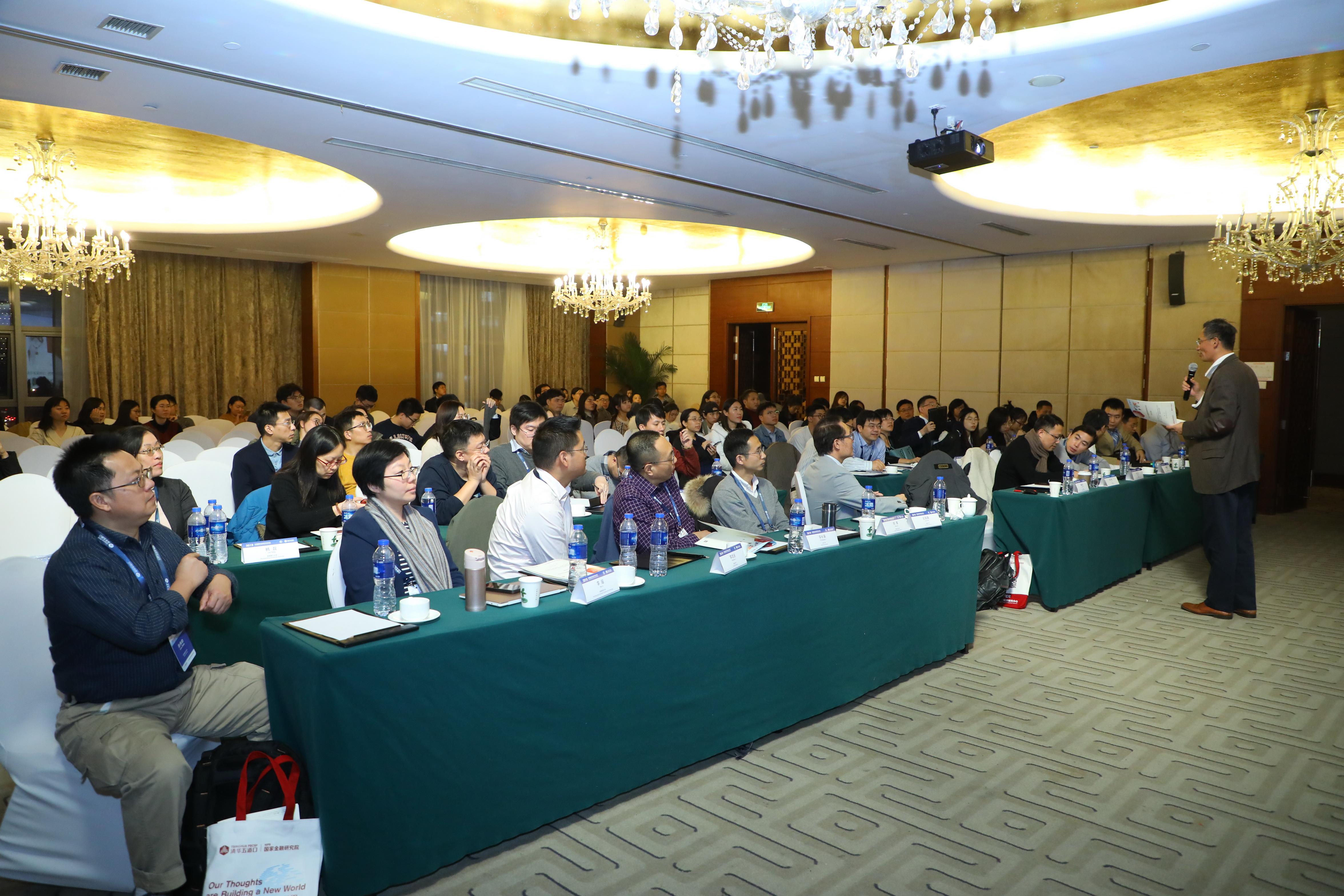
News | "2019 China International Trade Research Annual Conference" —— Venue 1
On Friday, December 6, 2019, the “2019 Annual Conference of the China Council for the Study of International Trade (CTRG),” hosted by the CTRG, organized by the Center for International Finance and Economics Research (CIFER) of the National Institute of Financial Research at Tsinghua University, and strongly supported by the School of Business of Shanghai University of Finance and Economics and the Shanghai Institute of International Finance and Economics, was grandly opened at Tsinghua University. This conference brought together leading scholars in the field of international trade research to share their latest research findings, bringing new vitality to international trade research.
The China Council for the Study of International Trade (CTRG) is a nationwide, non-profit academic organization dedicated to promoting research and development in international trade and investment in my country. It also provides a valuable platform for training and academic exchange in this field. Its establishment has received enthusiastic support and participation from top trade scholars both domestically and internationally. This conference, the 9th CTRG Annual Meeting, received nearly 100 academic submissions. All CTRG members gathered at Tsinghua University to review and discuss the selected articles, making it the most successful conference to date.
 (Group photo of attendees)
First, Qiu Dongxiao, former chairman of CTRG, vice dean of the Faculty of Economics and Business Administration of the University of Hong Kong, and Chung Han Tak (Economic Development) Foundation Professor, and Ju Jiandong, chairman of CTRG, director of CIFER, Ziguang Chair Professor of the School of Finance of Tsinghua University, and Changjiang Scholar Professor appointed by the Ministry of Education, delivered opening remarks.
 (Photo of Professor Ju Jiandong)
Professor Ju stated that CTRG has reached its ninth year of gatherings, and the ninth CTRG Annual Meeting will be a turning point. He reviewed the early context of CTRG's concepts and training organization, as well as the development of international trade research and the shared exploration process over the past few years. The first CTRG meeting was held at Shanghai University of Finance and Economics; today's academic pioneers and trailblazers were not even graduates at that time. As trade research flourished in China, CTRG attracted more academic attention and a pool of new talent, destined to provide valuable guidance in both academic research and practice. CTRG will always be a serious academic organization, contributing to international trade research; at the same time, CTRG is also an open academic community, bringing beneficial development guidance and future visions through discussion and dialogue.
With Professor Ju's opening remarks, the "2019 China International Trade Research Annual Conference" officially commenced. Each paper presenter and academic commentator shared their perspectives. The first paper was by Professor Qiu Dongxiao on the relationship between my country's Value Added Tax (VAT) growth and the rate of export growth. Professor Qiu used my country's "Golden Tax Project" as an example to strongly support his argument. The study found that before the implementation of the "Golden Tax Project," geographical location (distance from the local tax bureau) was a significant factor influencing corporate tax avoidance. The "Golden Tax Project" significantly reduced tax evasion, leading companies to reduce domestic sales and increase exports.
 (Photo of Professor Qiu Dongxiao)
Associate Professor Ma Hong, Deputy Director of the Department of Economics at the School of Economics and Management, Tsinghua University, and a Young Changjiang Scholar of the Ministry of Education, provided a brief commentary on Professor Qiu's academic report. The guests and audience members present engaged in a pleasant and lively discussion about the two professors' presentations.
 (Photo of Professor Ma Hong)
The second paper presented at the conference was "Global Sourcing and Domestic Value-added in Exports" by Assistant Professor Qi Han from Hong Kong Baptist University. The paper primarily investigates the following question: What factors influence a country's domestic content in exports or its domestic value-added ratio (DVAR) of exports? Professor Qi quantified the determinants for various countries and regions by constructing a multi-sector Eaton-Cortem model with domestic and global input-output linkages. Using a calibrated version of this model and the World Input-Output Database (WIOD) from 1995 to 2008, the changes in national and global DVAR caused by external variations can be fully decomposed. The model's explanatory validity effectively answers the research question.
 (Photo of Professor Qi Han)
Fan Haichao, Vice Chairman of CTRG and Associate Professor of the School of Economics at Fudan University, offered several suggestions regarding Professor Qi's article: 1. The impact of the three factors on DVAR can be decomposed into several components corresponding to the results, making the results clearer; 2. Quantitatively analyze the relationship between DVAR and welfare; 3. The exogenously given capital k_n in this article can be internalized by referring to Eaton, Kortum, Neiman, and Romalis (2016); 4. Referencing Caliendo, Parro, and Tsyvinski (NBER), the input-output relationship can be internalized, and the three factors affect DVAR by changing the input-output coefficients.
 (Photo of Professor Fan Haichao)
Zhu Linke, Associate Professor and Head of the Department of World Economics and International Trade at the School of Business, Shanghai University of Finance and Economics, shared her article, "Neighboring Importers, Network and Firm Export." This article primarily analyzes the externalities of import trade from the perspective of information spillover, innovatively linking neighboring imports with firm exports, ultimately demonstrating that the behavior of importing firms can influence exporting trade activities through information spillover. Professor Zhu pointed out that when domestic enterprises first enter the international market, they exhibit trial-and-error behavior and build relationship networks to acquire information. Through the analysis and summarization of these two phenomena, she identified two information acquisition mechanisms for firm learning from neighbors: first, a pure information sharing mechanism, where information is directly shared between neighbors or acquired through the behavior of neighboring firms in the international market—a point-to-point, direct, and concrete mechanism; and second, a network sharing mechanism, where connections are established through trade and exchanges—an indirect, more systematic, and holistic information acquisition mechanism.
 (Photo of Professor Zhu Linke)
Zhang Hongsong, Vice President of CTRG, Assistant Professor of Economics at the Faculty of Economics and Business Administration of the University of Hong Kong, and Deputy Director of the Institute for China and Global Development (ICGD) at the University of Hong Kong, commented on Professor Zhu Linke's report: First, the research was "logically clear and rigorous, with a novel and interesting topic, and clear and reliable conclusions," contributing to many existing publications in the field; second, the greatest contribution of the research lies in "further discovering the information spillover effect of imports while controlling the information spillover from exports." Following his comments, Professor Zhang engaged in a lively discussion with Professor Zhu and other guests on other aspects of the field.
 (Photo of Professor Zhang Hongsong)
Professor Wang Yongjin, Professor of the Department of International Economics and Trade, School of Economics, Nankai University, and a recipient of the Ministry of Education's "Young Changjiang Scholar" award, shared his research findings on "Learning to Import from the Exporting Networks." Professor Wang pointed out that the internet, as one of the greatest inventions of the 20th century, is profoundly changing all aspects of human society. However, the advancement of information technology has not reduced the impact of geographical distance on international trade; on the contrary, it has increased. Combining data from China's customs export trade, the number of global two-way internet hyperlinks, and the CEPII bilateral trade database, Professor Wang examined the impact of global internet networks on corporate export behavior using a "reduced-form model." He constructed a dynamic international trade network model and characterized the impact and mechanism of the internet on international trade networks. Professor Wang emphasized that with the expansion of my country's foreign economic and trade relations, the impact of the internet on the export competitiveness of Chinese enterprises will be further strengthened.
 (Photo of Professor Wang Yongjin)
Liu Qing, Vice President of CTRG, Professor at the National Academy of Development and Strategy of Renmin University of China, and Director of the Center for International Economics and Finance, commented on Professor Wang's article. He believes that there is still room for expansion in the explanatory power of the important facts regarding exchange rates and trade relations; introducing a single instrumental variable is insufficient to solve the problem, and the three endogenous variables mentioned in the article should be considered.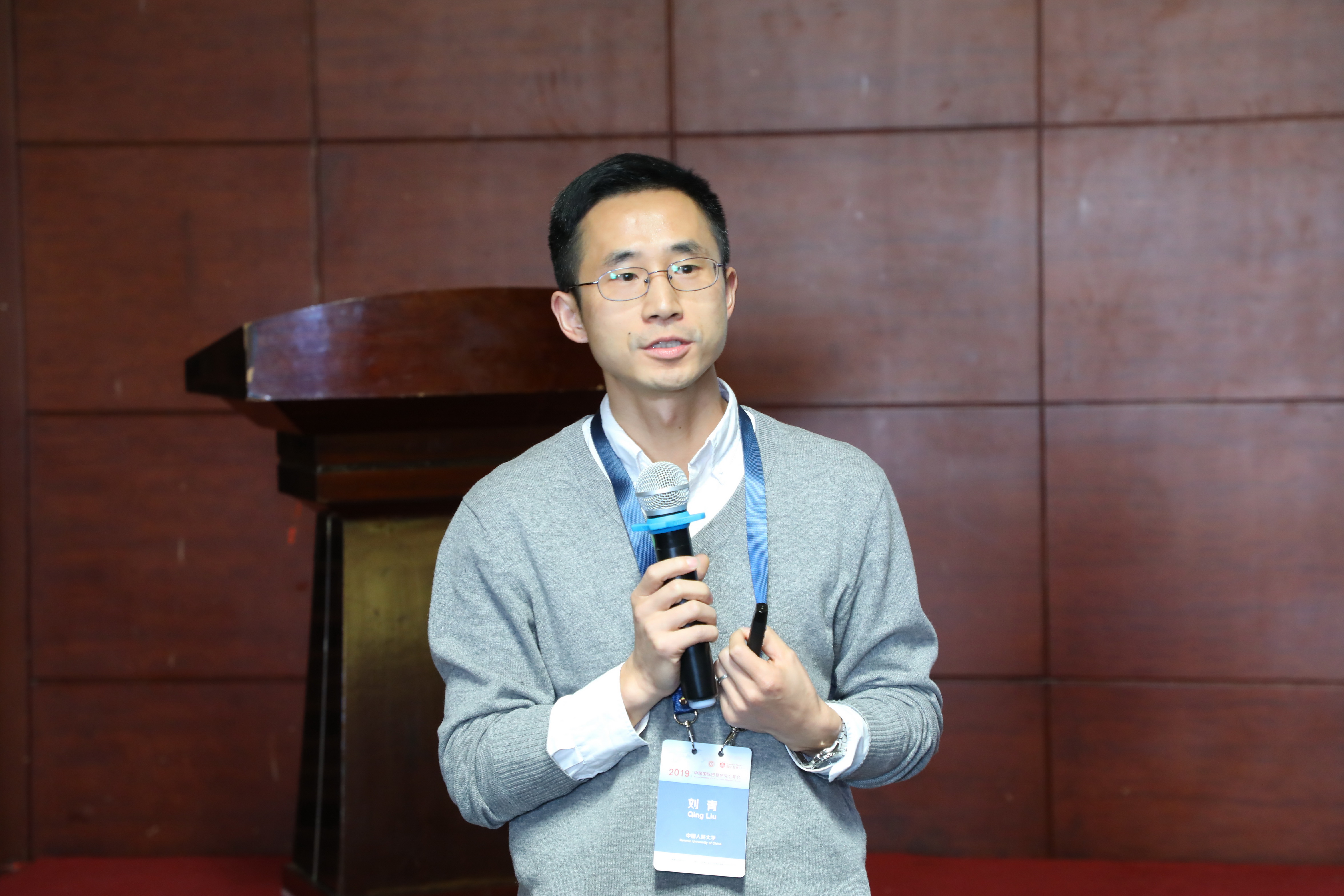
The first session concluded successfully amidst an open, enthusiastic, and insightful discussion and critique. Scholars shared innovative perspectives and shared consensus that are worth promoting, setting a positive tone for the subsequent sessions.