On the afternoon of December 7, 2019, Professor Cui Fan, Executive Director of the China WTO Research Association and Professor of the School of International Economics and Trade at the University of International Business and Economics, attended the "2019 International Trade Relations and Globalization Restructuring" academic seminar jointly organized by the Center for International Finance and Economics Research (CIFER) of the National Institute of Financial Research at Tsinghua University and the Center for Cross-border Digital Capital Research (IDC) of the Institute of Fintech Research at Tsinghua University in the Centennial Auditorium of Tsinghua University, and participated in the roundtable forum on "China-US Trade Disputes and World Order".
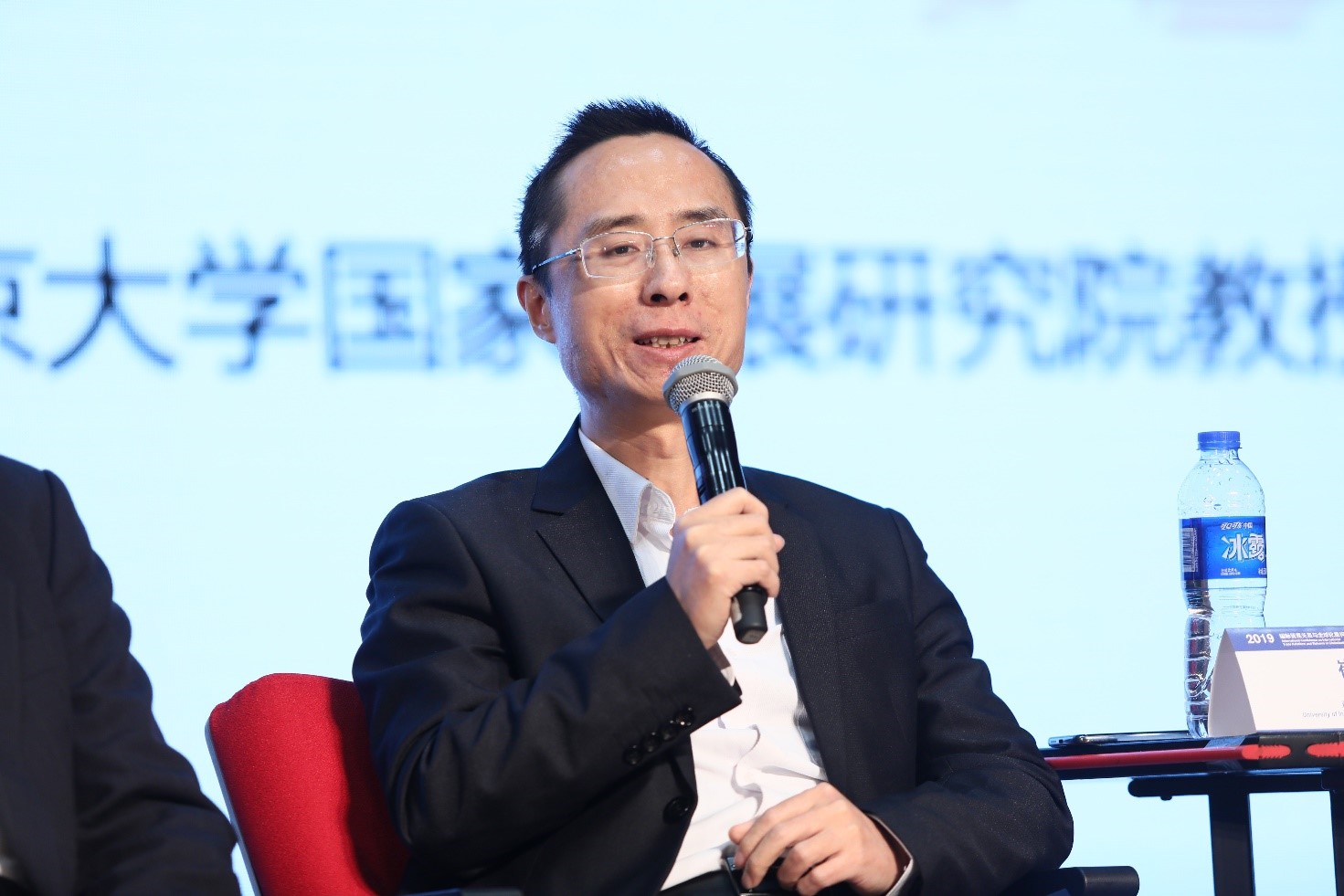
(Professor Cui Fan's speech)
At the beginning of his speech, Professor Cui raised two important dates: December 10, 2019, the day the World Trade Organization's Appellate Body ceased functioning; and December 15, the originally scheduled date for the US to impose tariffs on approximately $160 billion worth of Chinese goods. He stated that China's negotiating position included the following three points:
First, agricultural product purchases under the Phase One agreement must be conducted reasonably in accordance with WTO principles and market conditions, and no purchase amount commitments can be made. Second, all additional tariffs must be eliminated. The amount of additional tariffs eliminated in each phase of negotiations should be commensurate with the content of each phase. Third, the decision of the Fourth Plenary Session of the 19th CPC Central Committee represents the space for negotiation for China and the bottom line that it must adhere to.
Professor Cui stated that Part VI of the Fourth Plenary Session's decision addresses upholding and improving the basic socialist economic system, with the fifth aspect mentioning building a new system for a higher-level open economy. This reflects both a domestic need and a gesture of goodwill in negotiations. Professor Cui pointed out that...From the perspective of the overall description of the basic socialist economic system, we should establish a system that combines competitive neutrality and ownership neutrality: for example, the full opening up of the financial and automotive industries, the full implementation of national treatment after market access, the implementation of the principle of competitive neutrality, the implementation of the national system for developing scientific and technological innovation, the consolidation of the public sector, and the support and guidance of the non-public sector, etc.
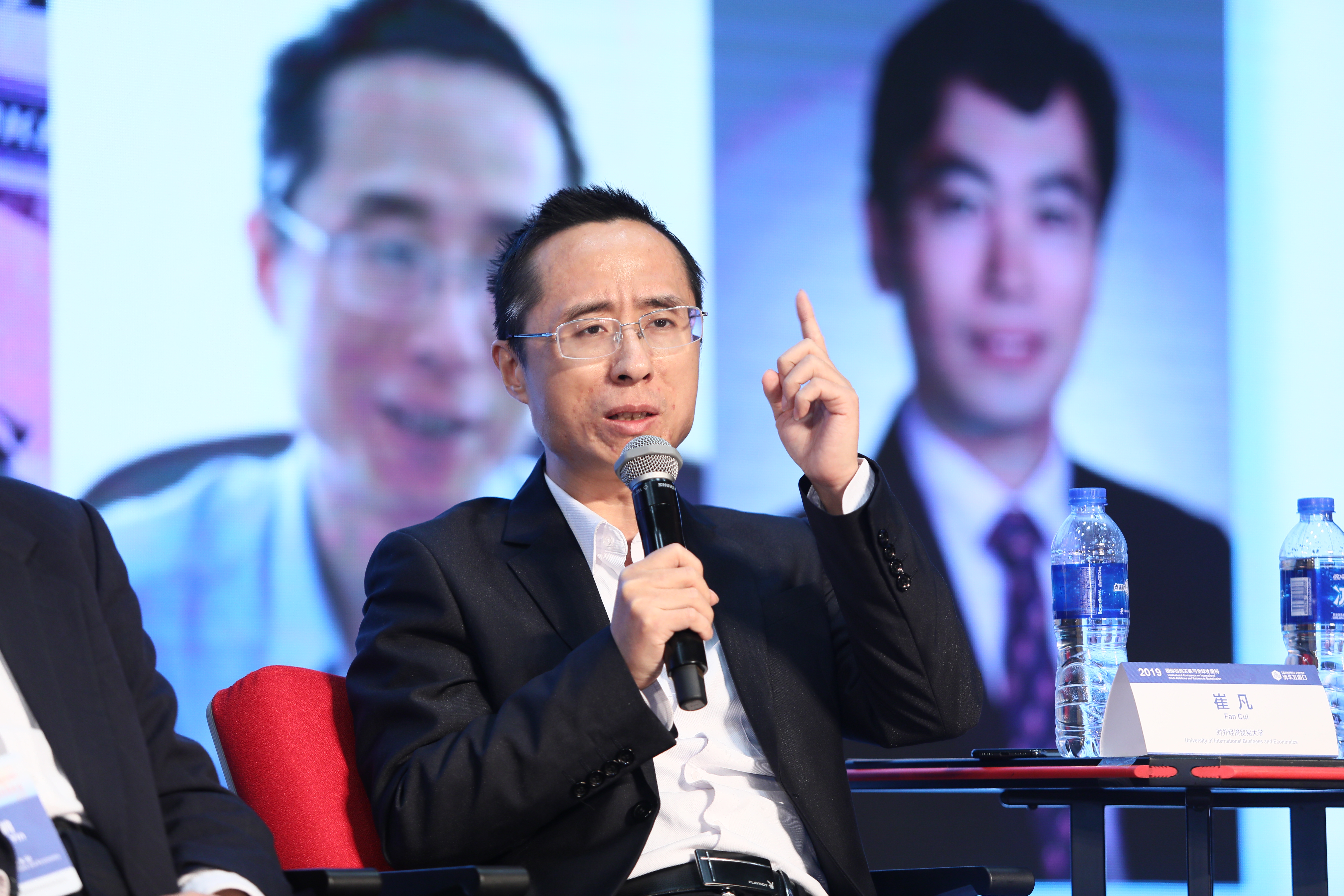
The following is a transcript of Professor Cui Fan's speech at the roundtable forum:
Cui Fan:Thank you everyone. Next week, there are two important dates for China-US trade relations—
1. On December 10th, the World Trade Organization Appellate Body was suspended. I was still counting cases of the United States failing to comply with WTO rulings at noon today (December 7, 2019).Since the end of 2001, there have been nine cases that have entered the retaliation process, but there have been none in China.The shutdown is pretty much a foregone conclusion; it's basically over.
2. On December 15th, the United States imposed a batch of tariffs on China (tariffs on more than $160 billion worth of products). It was originally said that the additional tariffs would be imposed on that day.A well-known American think tank expert believes that the mood in Washington is rather pessimistic about whether an agreement can be reached.
Another senior U.S. official raised these points when addressing this issue.
First, he believes that the US authorities are indeed very keen to reach an agreement.I believe that, from China's perspective, China also very much wants to reach an agreement.
Secondly, when he talked about the contents of the first phase agreement, in addition to what we have reported in the media, he also mentioned that the contents included intellectual property rights and technology transfer issues, but did not include subsidies.The issue of subsidies is a very difficult problem to resolve quickly. Postponing it to the later stages, I think, shows that both sides are trying their best to reach a phase one agreement.
Finally, will the additional tariffs be imposed on December 15th or not?It's possible the date will be postponed. Of course, we hope it can be reached before then, but it's also possible it will be postponed, because Trump has done this several times before.However, I think we also need to be mentally prepared for the worst.
One important aspect of the first phase agreement is the procurement of agricultural products. Regarding the procurement amount, this includes the three important positions that China put forward in May of this year, one of which is that the procurement amount must be reasonable.Committing to purchase amounts is a trap. On the one hand, we need to carry out structural and market-oriented reforms, but at the same time, we need to commit to purchases of hundreds of billions of dollars, which is inherently contradictory.In addition to government procurement, the Chinese government also has nine types of imported goods under the state-run trading system. Even after procuring them through various compliant methods, it is still difficult to meet excessively high procurement amounts, and it may even violate the WTO's most-favored-nation principle, which may cause countries such as the EU and Australia to believe that it has harmed their third-party interests.
Therefore, our procurement process should be conducted in accordance with WTO principles and market conditions to ensure reasonable procurement.
Regarding the removal of additional tariffs, we believe that negotiations are only considered complete when all additional tariffs are removed. If negotiations are conducted in stages, the amount of additional tariffs removed in the first stage should match the content of the first stage. This is a position we have maintained since May.
What room for maneuver do we have in the overall negotiation content, especially regarding structural reforms and to what extent can we achieve? A clear indicator is the 19th CPC National Congress.the fourth plenary session)The decision comprehensively outlines China's basic national governance system, including its various systems and mechanisms.
(the fourth plenary session)Part VI of the decision discusses upholding and improving the basic socialist economic system, outlining five aspects.The fifth aspect is to build a new system for a higher-level open economy.Our further opening up is both a necessity for ourselves and a gesture of goodwill towards the other party in the negotiations.
Since 2014, China's openness to foreign investment has increased rapidly, while the level of restrictions has decreased drastically.As can be seen from the OECD's FDI restriction index, the degree of restriction remained largely unchanged between 2008 and 2014, but declined rapidly after 2014.
In some sectors, such as the banking sector, the restriction index in 2018 was already lower than that of the United States and Switzerland. Of course, there is still considerable room for further opening up. With the full opening of the financial sector in 2020 and the full opening of the automotive sector in 2022, I estimate that after 2022, China's level of openness will reach that of Canada and Australia.
In addition to opening up market access, post-access measures should fully implement national treatment.Article 9 of the Foreign Investment Law and Article 9 of the Implementing Regulations of the Foreign Investment Law clearly state that government support measures should be implemented equally for all enterprises. Specifically, in terms of finance, taxation, land use, human resources, and even professional title evaluation, all should be treated equally. This is a concrete manifestation of the principle of competitive neutrality.
What are some things that are not easy for us to change, such as the system and mechanisms for scientific and technological innovation?the fourth plenary session)This will be discussed as the fourth point in the section on determining the basic economic system.President Xi was talking about (the fourth plenary session)During the revision and discussion of the document, it was specifically mentioned that the science and technology system was added later after someone raised the issue during the discussion. The document mentioned a new national system for tackling key technologies under the socialist market economy system. It did not talk about independent innovation or independent control, but it did talk about a new national system for tackling key technologies.
Furthermore, the first principle of our basic socialist economic system is to unswervingly consolidate and develop the public sector of the economy (I think consolidation, development, and optimization would be better), while unswervingly encouraging, supporting, and guiding the non-public sector of the economy. Both of these must be taken into account at the same time.
From the perspective of the overall description of the basic socialist economic system, we should establish a system that combines competitive neutrality and ownership neutrality. On this basis, we can demonstrate our room for negotiation, which also implicitly contains our bottom line in negotiations.Thank you everyone!
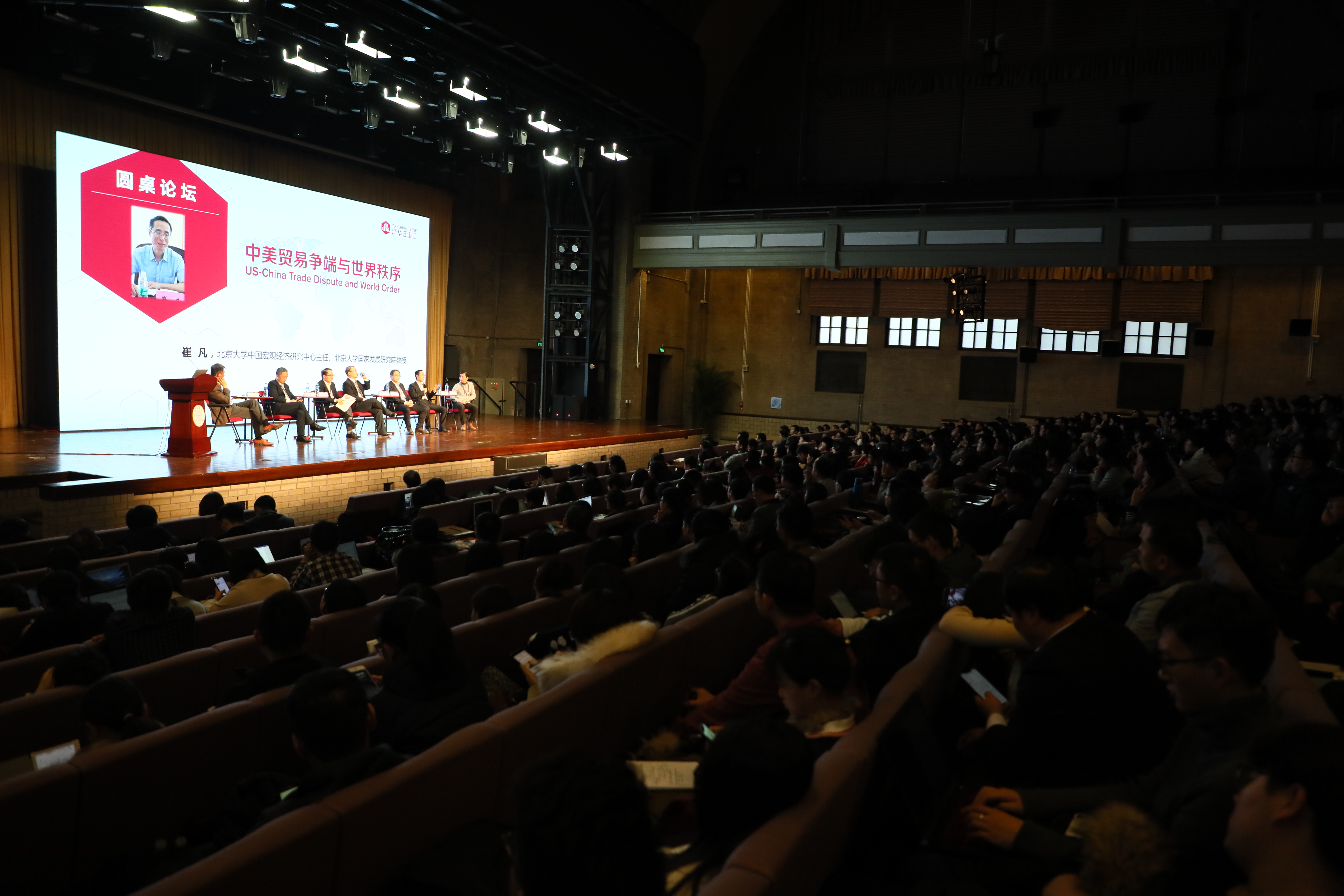
The following is a transcript of Professor Cui answering questions from the audience:
Question:I have an MBA from Tsinghua University and am currently working in the commodities field. I would like to ask a more specific question. As Professor Cui Fan just mentioned, China is purchasing a large amount of agricultural products from the United States. As far as I know, the figure is 40-50 billion US dollars, to be implemented over two years, provided that both sides cancel tariffs.As far as I know, purchases in 2017 had already reached over 20 billion before the trade war.One viewpoint is that such an agreement is actually a meaningless one. What is your opinion on this issue?
answer:Regarding the soybean issue, aside from media reports, I don't know the specific amount of the agreement.When the initial agreement was reached in the first phase, Trump gave a speech in which he said he was very happy and told American farmers, "I have secured a great deal for you. I hope you will quickly buy American-made tractors to expand production." That was his statement at the time.
From my perspective as a researcher, I am strongly opposed to making import commitments. When China was reinstated as a founding member of the GATT, one of the three principles for reinstatement was to restore its status through tariff reductions, not import commitments.
Yesterday, the State Council Tariff Commission announced that it would exempt agricultural products such as soybeans from additional tariffs through an exclusion procedure and accept exclusion applications from enterprises.I think that apart from a portion that may be imported through government procurement, the vast majority of soybean imports will be made by enterprises according to market conditions after tariff exemptions are granted.
Some media outlets have reported that the previously issued tariff exemption quotas for soybean imports are almost exhausted. Therefore, the current process is to continue to allow applications for exemptions from the additional tariffs imposed by the United States in retaliation. I think this is already a considerable concession.Thanks!