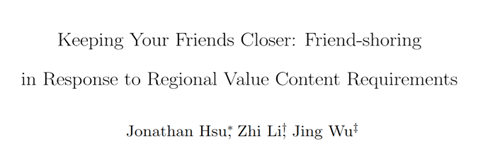
Recently, the Center for International Finance and Economics Research (CIFER) of the National Institute of Financial Research at Tsinghua University hosted...Academic Symposium on "2022 International Trade Disputes and the Restructuring of Globalization"The event was successfully held.Professor of Business School, The Chinese University of Hong KongWu JingAttendDepend onCIFERAssistant Research Fellow, Tsinghua University PBC School of Finance (Postdoctoral Fellow)Li YuankunHostTrade disputesFDIWith innovationSub-forum 3Sharing with collaborators (as shown below) titled"Getting Closer to Friends: Addressing Regional Value Content Requirements Through Outsourcing"(Keeping Your Friends Closer: Friend-shoring in Response to Regional Value Content Requirements) The article.
Jing Wu, Tenured Professor and Doctoral Supervisor, Department of Decision Sciences and Business Economics, Business School, Chinese University of Hong Kong Director of the MSc in Business Analytics program, Senior Scientist at the Hong Kong Government's Artificial Intelligence and Fintech Lab, and Deputy Director of the Asian Logistics and Supply Chain Research Centre. He graduated from the Department of Electronic Engineering at Tsinghua University and holds an MBA and PhD from the University of Chicago Booth School of Business. His main research areas are corporate operations and financial interfaces, global supply chains, fintech, and business intelligence. His academic papers have been published in [Journal Name - not specified].Management Science,M&SOM and POMS His opinion pieces have been published in top business and management journals, including internationally renowned magazines such as the Sloan Management Review, The Economist, and Forbes.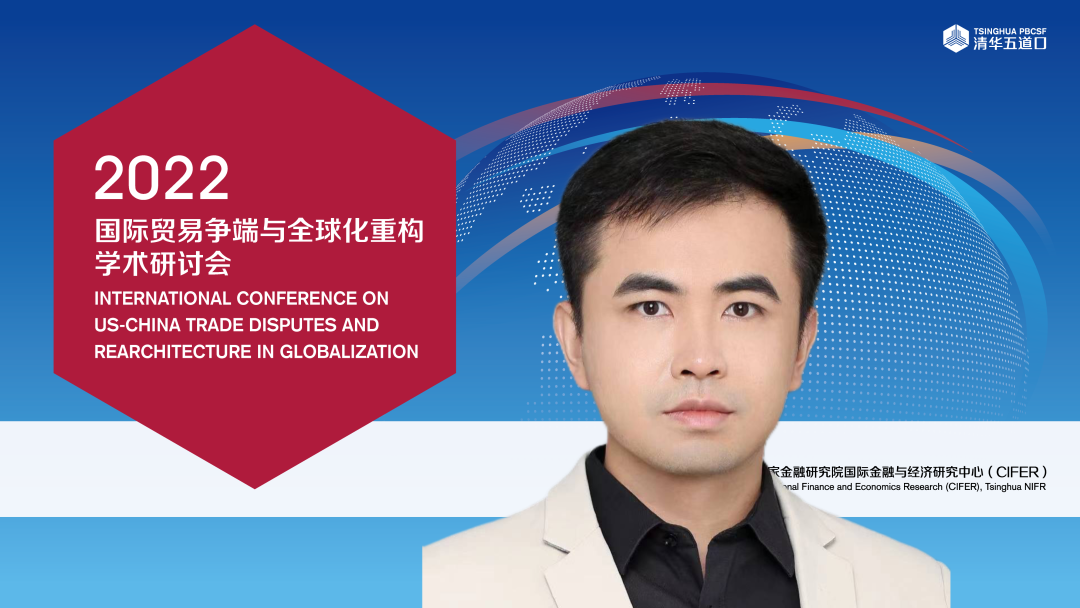
Wu Jing
This paper explores the effectiveness of economic policies that encourage friend-shoring. It examines the US friend-shoring policy following the implementation of the United States-Mexico-Canada Agreement (USMCA), which led to a shift in US imports from other trading partners to Mexico and Canada. The study finds that companies also tend to adopt more diversified supply chain structures and increase the number of suppliers from Mexico and Canada, but finds relatively weak evidence supporting the repatriation of US outsourcing operations. When complying with the new USMCA requirements, companies are more inclined to outsource ICT (Information, Communication and Technology) products in friend-shoring. At the firm level, the level of precautionary investment and the degree of financial entanglement are important factors determining whether firms choose nearshore or repatriation outsourcing. The study indicates that regional value content requirements are an effective tool for encouraging friend-shoring, particularly in stimulating nearshore outsourcing.In recent years, the global economy and trade have experienced a series of escalating shocks, including the US-China trade war initiated by the Trump administration, the COVID-19 pandemic, and the Russia-Ukraine conflict, which have reduced the stability of the global supply chain.
Recently, senior Biden administration officials, including Treasury Secretary Janet L. Yellen and Commerce Secretary Gina Rainmondo, have repeatedly mentioned the concept of "friend-shoring" in public, viewing it as a diplomatic tool for the Biden administration to reshape more resilient supply chains. The concept of "friend-shoring" borrows from "offshoring" and "nearshoring," with "friends" referring to countries friendly to the US, primarily its allies. Outsourcing means transferring production facilities to friendly countries, strengthening trade cooperation between the US and these countries that "share common values," thereby avoiding or reducing over-reliance on countries posing geopolitical risks for strategic resources.However, while many current economic policies aim to encourage supply chain outsourcing to neighboring countries, there is a lack of academic research exploring the effectiveness of these policies in encouraging such outsourcing. In recent literature on global supply chain restructuring, Charoenwong, Han, and Wu (2022) found that trade uncertainty stemming from the US-China trade war has led to a diversification of outsourcing, but not necessarily a return of manufacturing to the US or its friendly neighbors.This article attempts to answer this question by examining the changes in the supply chain structure of US automakers following the renegotiation of NATO. The supply chain structure of US automakers underwent significant changes after the signing of the USMCA (United States-Mexico-Canada Agreement). This agreement, which came into effect on July 1, 2020, stipulated stricter regional value content requirements than previous trade agreements. The latter imposed stricter regional value content requirements on a selected set of products (referred to in this article as "processed products"), focusing on products that the automotive industry typically imports. For processed products, the USMCA increased the percentage of total added value of the final product, and these added values must originate from domestic or foreign outsourcing or friendly outsourcing regions. To comply with the requirements, imported processed products will be near-shored by utilizing more Mexican and Canadian suppliers.The data for this study primarily comes from: 1. Panjiva maritime import data. This provides a transaction-level record of all import activities through sea-based shipping routes. 2. Total trade data from the United Nations Commission on Trade Statistics (UN Comtrade) and the US Census Bureau. 3. The Compustat database, generating a firm-level dataset. The overall dataset consists of 40,127 observations.This paper examines the changes in the supply chain structure of US automakers under the United States-Mexico-Canada Agreement (USMCA), which came into effect on July 1, 2020, to explore how to enhance the effectiveness of "nearshore outsourcing" trade by reformulating trade agreements to strengthen regional value chain content. Here, "return" refers to a company shifting from foreign suppliers to domestic suppliers. Nearshore outsourcing refers to transferring import trade to countries deemed more in line with national interests (Canada and Mexico). The specific research approach is as follows:The implementation of the USMCA has two distinct characteristics at the national and corporate levels: (1) At the national level, all imported goods covered by the trade agreement are clearly classified into treated groups, while imported goods not covered are classified into untreated groups; (2) At the corporate level, similar classifications can be made based on all imported goods covered by the trade agreement, the company's main business, and the type of imported goods. Subsequently, a DID analysis was conducted to investigate the impact of the USMCA on the supply chains of US automakers.For the country-level analysis, changes in total imports and the import share of MCA (Mexico and Canada) countries were investigated. Changes in total imports considered factors including value, transaction volume, and number of suppliers. The model is as follows:

ANDcptThis indicates the change in total imports, among which c Indicates the country of purchase.pProducts with a 6-digit HS code,tFor months.TreatpWhen productpThe value is 1 if it is a passenger car, light truck, or component listed on the USMCA, and 0 otherwise.POST July2020tThis is a dummy variable indicator for months following July 2020. Fixed effects include the purchasing country.Country FEs,productProduct FEand year and monthYear_Quarter FE。The study examines changes in the import share of MCA (Mexico and Canada) countries, considering factors such as import value, transaction volume, transaction amount, and number of suppliers. The model is as follows:

in,iIndicates a company,pProducts with a 6-digit HS code,tFor time. Outcome variable.ANDiptThis can be a measure of absolute import value or the share of imports from MCA. The value is 1 when company i is within the SIC classification industry code 3711 (motor vehicles and passenger car bodies).POSTJuly2020tThese are dummy variables for months after July 2020. Fixed effects include firm-level fixed effects (Firm FE), product-level fixed effects (Product FE), and year-quarter-level fixed effects (Year-Quarter FE). Although we controlled for firm and time fixed effects, other firm-level characteristics may change over time and also affect the outcome variables. Therefore, firm-level control variables (Firm Controlsit) were included, including gross margin (gm), cost of goods sold (cogs), capital intensity (cap int), sales growth (sg), and firm size (size).This paper uses the USMCA as a research sample to demonstrate the effectiveness of regional value content requirements in encouraging global supply chain restructuring. Specifically, the study found that after the implementation of the USMCA, companies were more inclined to adopt a more decentralized supply chain structure among suppliers in Mexico and Canada. This indicates that regional value content requirements are effective in encouraging greater supply chain diversification. Finally, in terms of the type of goods to be outsourced, companies are more inclined to outsource ICT (Information, Communication and Technology) products. At the firm level, the level of precautionary investment and the degree of financial entanglement are important factors determining whether firms choose nearshore outsourcing or backshore outsourcing. In conclusion, the study shows that regional value content requirements can reduce the dependence of supply chains on non-aligned countries and improve the diversity and stability of supply chains, while also being significantly effective in stimulating nearshore outsourcing.
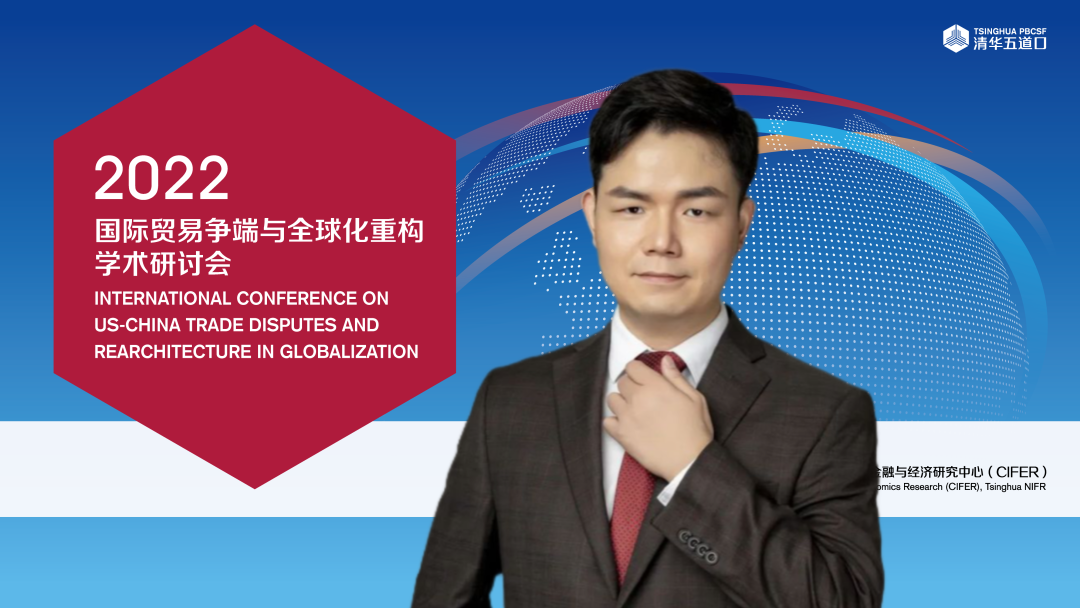
Zhan Chaoqun
Lingnan College, Sun Yat-sen UniversityAssistant ProfessorZhan Chaoqun He expressed his approval of the article. He believes that this paper, by using detailed micro-data, studies the impact of the stricter regional value content requirements in the USMCA on the outsourcing behavior of US companies at both the national and corporate levels. It makes a significant contribution to the study of how regional value content reshapes the US trade supply chain, and suggests that a deeper study of the intrinsic relationships and changes in regional value content may be more helpful in clarifying its impact on supply chain changes.
